Pre Market
Discover the early stages of crypto project funding, from private sales to IDOs, and learn how to navigate this high-potential, high-risk landscape.
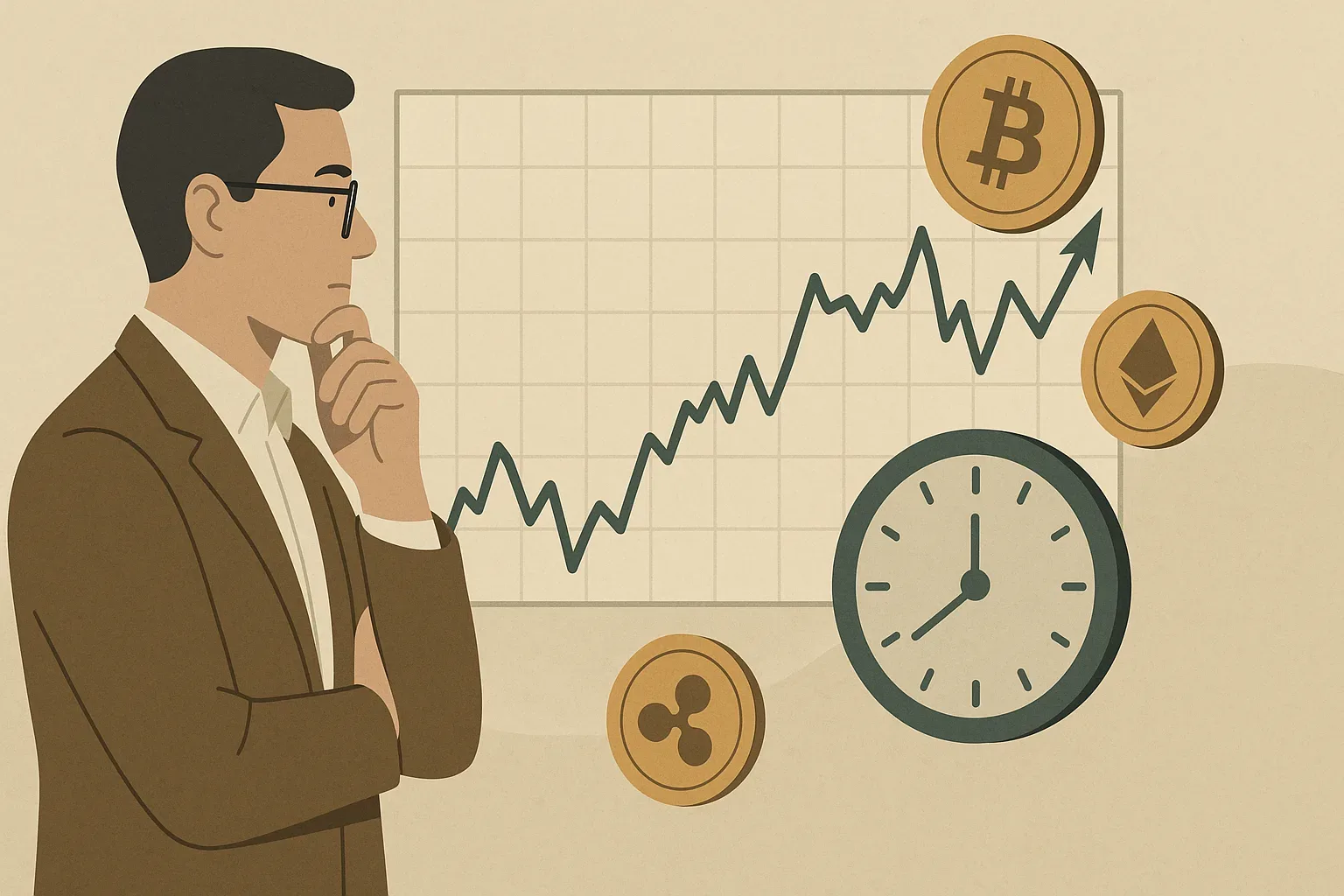
What Does "Pre-Market" Mean in the Crypto World?
The term "pre-market" typically evokes images of traditional stock exchanges, where certain shares can be traded before the official opening bell. It refers to the period during which a cryptocurrency project's native tokens are offered for sale to a select group of investors or the broader public before they become widely available for trading on mainstream centralized or decentralized exchanges.
Unlike traditional markets where pre-market activity might involve institutional trading of established assets, crypto pre-market often pertains to nascent projects. These are ventures in their infancy, sometimes with little more than a whitepaper, a prototype, or a core development team.
What is "pre-market" in the context of cryptocurrency? In cryptocurrency, "pre-market" refers to the period when a project's tokens are sold to early investors before they are officially listed and available for public trading on exchanges, often at discounted prices to secure initial funding and build support.
Different Types of Crypto-Based Pre-Market Opportunities
The cryptocurrency space has innovated numerous models for pre-market token distribution and fundraising, each with its own structure, target audience, and risk profile. These mechanisms allow projects to raise capital while offering early investors a chance to participate in their growth story. The landscape has evolved significantly since the early days of Bitcoin, reflecting the industry's rapid maturity and adaptation.
Initial Coin Offerings (ICOs) were among the earliest and most prominent forms of pre-market fundraising, gaining immense popularity in 2017. In an ICO, a project sells a new cryptocurrency or token to fund development. Investors typically send established cryptocurrencies like Ethereum or Bitcoin to a smart contract address and receive the new tokens in return. While many successful projects originated from ICOs, the lack of regulation also led to a significant number of scams and failures, prompting a shift in the market.
Initial Exchange Offerings (IEOs) emerged as a response to some of the issues with ICOs. With an IEO, a cryptocurrency exchange acts as an intermediary, facilitating the token sale on behalf of the project. This model offers increased credibility and often easier access for retail investors already using the exchange, as explained further in our guide on centralized or decentralized exchange models.
In an IDO, tokens are often sold through a liquidity pool on a DEX. Participation typically involves locking up certain tokens on the launchpad to gain access to allocation rounds.
Private Sales, which follow seed rounds and involve a broader but still curated group of investors, including crypto venture capital firms. For these early investors, the tokens often come with vesting schedules, meaning they are locked up for a period to prevent immediate sell-offs and ensure long term commitment to the project.
How to Participate in Crypto Pre-Market Sales and Launches
Participating in crypto pre-market opportunities can be a complex process, varying significantly depending on the type of sale and the project's stage. Generally, it requires a combination of diligent research, strategic positioning, and adherence to specific platform requirements. The earlier the stage of investment, the more exclusive and often less accessible it becomes for the average retail investor.
Retail investors rarely participate directly in these earliest rounds, though they might indirectly benefit if the VC-backed project later holds a public sale.
Investors need to register an account on the specific exchange (e.g., Binance Launchpad, KuCoin Spotlight), complete KYC (Know Your Customer) verification, and often hold a certain amount of the exchange's native token (like BNB for Binance) to be eligible for an allocation lottery or subscription model.
IDOs primarily take place on decentralized launchpads, which are often integrated with DEXs or operate independently on various blockchain networks (e.g., Ethereum, Polygon, Solana).
Always verify the authenticity of links and information to avoid common crypto scams and red flags.
How can crypto investors participate in pre-market opportunities like IDOs, IEOs, or private sales? Participation involves researching reputable projects and launchpads, completing KYC on centralized exchanges for IEOs, or staking native tokens and connecting a non-custodial wallet for IDOs, while private sales typically require established industry connections and significant capital.
Benefits and Potential Gains of Early Investment
The primary allure of pre-market crypto investing lies in its potential for substantial financial gains. Getting in on a promising project at its earliest stages can lead to exponential returns if the project gains traction and its token's value appreciates significantly upon public listing and beyond. History is replete with examples of early investors in projects like Ethereum or Solana who saw their initial modest investments grow into fortunes. This 'early bird gets the worm' mentality is a powerful driver for many participants.
Beyond the direct financial upside, early investment offers several other benefits. Investors often acquire tokens at a significantly lower price compared to the initial listing price on exchanges, creating a built-in advantage. This discount serves as a reward for taking on the higher risk associated with unproven projects. For very early-stage investors, especially those in seed or private rounds, there might also be an opportunity to influence the project's direction or gain exclusive insights into its development through private community channels. This level of engagement can be particularly appealing to those who wish to be more than just passive holders.
It offers a chance to be at the forefront of technological advancement and potentially back the 'next big thing' in blockchain, decentralized finance (DeFi), NFTs, or Web3 gaming. For many, it is not just about the money, but also about supporting projects they believe will bring meaningful change to the digital world. The early support from these investors helps projects secure vital funding, enabling them to build their products, expand their teams, and execute their roadmaps, which in turn fuels the growth of the broader crypto ecosystem. The potential for substantial upside, often measured in multiples rather than mere percentages, differentiates pre-market crypto investing from more traditional investment avenues.
What are the potential rewards and upsides of getting into crypto projects during their pre-market stage? The potential rewards include substantial financial gains from buying tokens at significantly lower prices, early access to innovative technologies, and for some, the opportunity to influence project development, all contributing to the growth of the broader crypto ecosystem.
The Unique Risk Factors of Crypto Pre-Market
The very early stage of these projects amplifies many of the inherent volatilities and uncertainties already present in the broader cryptocurrency market. Unlike investing in an established asset that trades on the spot market, pre-market ventures carry a higher probability of total capital loss.
One of the most significant risks is project failure. Many crypto projects, especially those in their infancy, never manage to deliver on their promises or build a viable product. This can result from poor execution, insufficient funding post-sale, team disputes, or simply a lack of market fit. If a project fails, the pre-market tokens can become entirely worthless, leading to a complete loss of the initial investment. Another prevalent risk is the potential for scams, commonly known as "rug pulls." In a rug pull, the project developers abandon the project after raising funds, taking the investors' money with them. The anonymity often associated with crypto projects can make it difficult to hold perpetrators accountable, as highlighted in our guide on common crypto scams and red flags.
Illiquidity is another major concern. Pre-market tokens are often subject to vesting schedules, meaning they are locked up for a period and released gradually. This prevents immediate selling but also means investors cannot access their capital or profits until the tokens unlock, which can be months or even years. Even after unlocking, there is no guarantee of sufficient liquidity on exchanges to sell large quantities without significantly impacting the price. Different jurisdictions have varying stances on crypto assets, and evolving regulations, such as the MiCA regulation in Europe, could impact a project's legality or operational viability, retrospectively affecting pre-market investments.
Technical risks, such as smart contract bugs, vulnerabilities in the blockchain protocol, or security breaches, can also lead to significant losses. Poor tokenomics, including excessive supply, inadequate utility, or unfair distribution, can also undermine a project's long term value. These specific risks differentiate pre-market crypto investing from regular spot trading, where assets are already listed, have established liquidity, and generally a longer track record.
What are the specific risks involved in pre-market crypto investing compared to regular spot trading? Pre-market crypto investing carries higher risks of project failure, scams (rug pulls), illiquidity due to vesting schedules, regulatory uncertainty, technical vulnerabilities like smart contract bugs, and potential market manipulation, all of which are amplified due to the nascent stage of the projects.
Important Due Diligence Before Investing Pre-Market
Given the amplified risks associated with crypto pre-market opportunities, rigorous due diligence is not just recommended, but absolutely essential. A thorough investigation can significantly mitigate potential losses and help identify projects with genuine long term potential. This process goes far beyond simply reading a flashy marketing brochure; it requires deep dives into various aspects of the project.
Firstly, scrutinize the team behind the project. Investigate their backgrounds, previous successes or failures, and relevant experience. Are they publicly known, or anonymous? While anonymity isn't always a red flag, a transparent team with verifiable credentials adds a layer of trust. Look for team members with a proven track record in blockchain, software development, or relevant industries. Verify their social media presence and contributions to the broader crypto community.
Secondly, meticulously analyze the project's whitepaper and roadmap. The whitepaper should clearly articulate the problem the project aims to solve, its proposed solution, the underlying technology, and its economic model (tokenomics). Look for clarity, technical feasibility, and originality. The roadmap should outline achievable milestones and a realistic timeline for development and implementation. Understand how blockchains work to better evaluate the proposed technical solutions. Beware of vague promises or overly ambitious goals without clear execution plans.
Thirdly, assess the project's tokenomics – the economic model governing the token. This includes the total supply, distribution plan (how many tokens go to the team, advisors, private sale, public sale, etc.), vesting schedules for early investors and the team, and the token's utility within the ecosystem. A well designed tokenomics model ensures scarcity, encourages holding, and aligns incentives for all stakeholders. Unfair distribution or very short vesting periods can lead to massive sell-offs upon listing, crashing the price.
Fourthly, evaluate the project's technology and use case. Is the technology innovative and scalable? Does it solve a real-world problem or fill a significant gap in the crypto ecosystem? Who are the target users? Consider whether the project has a working product, a minimum viable product (MVP), or just an idea. Check for any independent security audits of their smart contracts, which can confirm the integrity and safety of the underlying code.
Finally, gauge the community and market sentiment. A strong, engaged community on platforms like Discord, Telegram, and X (formerly Twitter) can indicate genuine interest and support. However, be wary of overly hyped communities filled with bots or generic engagement. Research the competitive landscape: who are the project's competitors, and what differentiates this project? Also, verify a crypto service's license and identity if they are offering regulated services, ensuring they meet legal standards for operation.
What kind of due diligence is essential before investing in a crypto project during its pre-market phase? Essential due diligence includes scrutinizing the team's background, meticulously analyzing the whitepaper and roadmap, assessing the tokenomics, evaluating the technology and use case, checking for security audits, and gauging community engagement and competitive landscape.
The Future of Crypto Pre-Market and Early Stages
Looking ahead, several trends are likely to shape how new crypto projects are funded and how early investors participate.
One significant trend is the increasing institutionalization of crypto investment. More traditional venture capital firms, hedge funds, and even family offices are dedicating resources to early-stage crypto projects. This brings more sophisticated due diligence, larger capital injections, and often more stringent requirements for projects, potentially leading to a higher quality of ventures making it to the public stage. This institutional involvement may also lead to greater transparency and standardization in pre-market funding rounds, moving away from some of the ad-hoc approaches of the past.
As governments worldwide develop clearer frameworks for digital assets, the legal uncertainties surrounding pre-market sales will diminish. This could pave the way for more compliant and regulated fundraising mechanisms, potentially attracting an even broader base of investors who are currently hesitant due to the unregulated nature of the space. Regulations like MiCA are already setting precedents for how crypto assets and services are to be governed, impacting both issuers and service providers.
Technological advancements within the blockchain space itself will also influence early-stage funding. Innovations in areas like zero-knowledge proofs, layer-2 scaling solutions, and new consensus mechanisms will enable more complex and efficient project designs. This will likely lead to an even greater diversity of projects seeking pre-market funding, catering to niche markets and advanced use cases that were previously unfeasible. The increasing sophistication of decentralized autonomous organizations (DAOs) may also lead to new models for community-driven early-stage funding and governance, giving more power to token holders in guiding project development.
Despite these advancements, the fundamental principles of risk and reward will remain. Pre-market investing will likely always carry higher risks due to its early-stage nature, but with those risks will come the potential for outsized returns. The key for investors will continue to be rigorous due diligence, continuous learning, and adapting to the fast-changing dynamics of the crypto market. The future of crypto pre-market is likely to be characterized by a blend of institutional sophistication, regulatory oversight, and continued decentralized innovation, offering both new challenges and exciting opportunities for early participants.
03 · SCOPE
This content does not cover
- Specific financial advice or investment recommendations for particular crypto projects.
- Legal or tax advice regarding pre-market crypto investments.
- Detailed technical analysis of specific blockchain protocols or smart contracts.
05 · CORRECTIONS AND UPDATES
Correction and update history
No corrections or material updates have been made since publication. Corrections are logged here and in the corrections log.
06 · RELATED NODES
Read on
Market Research Survey
This guide provides a practical, no-hype approach for crypto projects and investors to conduct effective market research surveys, specifically designed for the unique dynamics of the blockchain and cryptocurrency ecosystem. Learn how to define objectives, design questions, select platforms, analyze data, and translate findings into actionable strategies.
How Blockchains Work – Without the Jargon
A blockchain is a shared ledger where transactions are grouped into blocks and chained together cryptographically. Here we explain the mechanics step by step, what decentralisation actually means, and where the technology's limits lie.
What Is a Crypto-Asset?
A crypto-asset is a digital representation of value or rights that can be transferred and stored electronically. Here we explain the concept, the most common categories, and why the definition matters for which rules apply.