Cryptocurrency Wallet Security
Empower yourself with actionable strategies to protect your digital assets, demystifying threats and offering specific best practices for all wallet types.
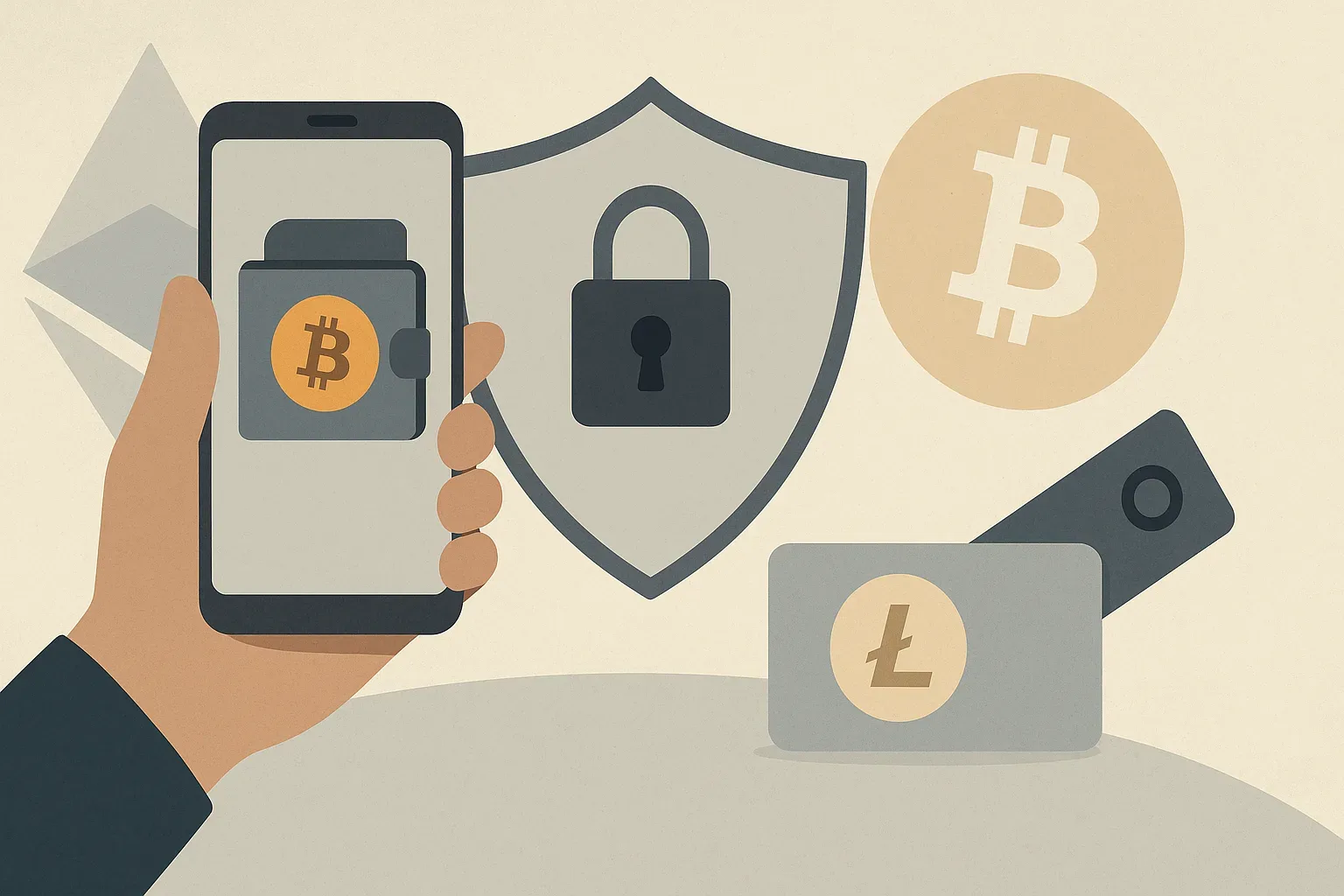
Introduction: Why Cryptocurrency Wallet Security is Paramount
Unlike traditional banking systems where institutions bear much of the security burden and offer recourse for fraud, the cryptocurrency ecosystem places the onus almost entirely on the individual user.
The immutable and irreversible nature of blockchain transactions means that once funds are sent to an attacker's address, recovery is often impossible. There are no chargebacks, no central authority to appeal to, and no customer service hotline to call if your wallet is compromised. Your digital assets are effectively self-custodied, making you your own bank and, consequently, your own chief security officer. Neglecting wallet security can lead to devastating and unrecoverable losses, turning potential gains into profound regret.
Understanding Your Wallet: Hot vs. Cold and Their Unique Vulnerabilities
Cryptocurrency wallets are broadly categorized into two main types: hot wallets and cold wallets. The distinction lies in their connection to the internet, which dictates their level of convenience and, crucially, their security profile.
Hot wallets are cryptocurrency wallets that are connected to the internet. This category includes desktop wallets, mobile wallets, web wallets (accessed via a browser), and exchange wallets (funds held by a centralized exchange). Their internet connectivity makes them highly convenient for frequent transactions, but it also exposes them to a greater range of online threats. These include hardware wallets, which are physical devices designed specifically for storing private keys, and paper wallets, which are printed physical documents containing your public and private keys or seed phrase. While less convenient for daily use, cold wallets offer significantly enhanced security for long term storage of substantial cryptocurrency holdings.
What are the fundamental differences in security between hot and cold cryptocurrency wallets? Hot wallets are internet-connected and offer convenience but face higher online threat exposure, while cold wallets store private keys offline, providing superior security against cyberattacks but are less convenient for daily transactions.
The unique vulnerabilities of hot wallets stem primarily from their online nature. They are susceptible to malware, phishing attacks, operating system vulnerabilities, and potentially compromised exchange servers. If your computer or phone is infected with a virus or keylogger, your private keys or login credentials could be stolen. Additionally, relying on an exchange means trusting a third party with your funds, introducing counterparty risk. These typically revolve around physical security: loss, theft, damage, or destruction of the device or paper.
Common Attack Vectors: Identifying Threats to Your Crypto Assets
Attackers are constantly innovating, using sophisticated methods to gain unauthorized access to wallets or trick users into compromising their own security.
What are the most common threats and attack vectors targeting crypto wallets today? The most common threats include phishing, malware, social engineering, SIM swapping, and supply chain attacks, all aimed at gaining unauthorized access to private keys or wallet credentials.
Phishing remains one of the most prevalent and effective attacks. This involves attackers attempting to trick you into revealing sensitive information, such as your private keys, seed phrase, or login credentials, by impersonating legitimate entities. This can manifest as fake websites designed to look identical to real cryptocurrency exchanges or wallet providers, deceptive emails, or malicious links sent via messaging apps. Always verify the authenticity of websites and communications before entering any sensitive data. Malware, including viruses, trojans, and keyloggers, can infect your computer or mobile device. Keyloggers can record your keystrokes, capturing passwords or seed phrases as you type them. Clipboard hijackers can replace a legitimate cryptocurrency address you copied with an attacker's address when you paste it. Remote Access Trojans (RATs) give attackers full control over your device, allowing them to directly access your wallet software or files.
Social engineering encompasses various psychological manipulation tactics designed to trick individuals into divulging confidential information or performing actions that compromise their security. This can include impersonating support staff, offering fake investment opportunities, or creating a sense of urgency to bypass rational decision-making. Users should be highly suspicious of unsolicited communications regarding their crypto assets. SIM swapping is a particularly insidious attack where criminals convince your mobile carrier to transfer your phone number to a SIM card they control. If you download a compromised wallet application or purchase a tampered hardware wallet, your assets could be at risk from the outset.
Fortifying Your Hot Wallets: Best Practices for Software and Exchange Security
While cold wallets offer superior security for large holdings, hot wallets are indispensable for convenience and frequent transactions. Implementing robust security practices for your software and exchange wallets can significantly mitigate their inherent risks. The key is to treat every online interaction with extreme caution and employ multiple layers of defense.
What specific, actionable steps can I take to secure my software (hot) wallet? To secure your software wallet, use strong unique passwords with 2FA/MFA, keep software updated, use dedicated devices, limit holdings, verify URLs, and avoid public Wi-Fi. For exchanges, choose reputable platforms and enable address whitelisting.
First, always use strong, unique passwords for all your cryptocurrency-related accounts, including exchanges, email, and wallet applications. Never reuse passwords across different services. Combine this with the strongest form of two-factor authentication (2FA) or multi-factor authentication (MFA) available. Hardware FIDO2 keys (like YubiKey or Google Titan) are far more secure than SMS-based 2FA, which is vulnerable to SIM swapping. Regularly update your operating system, browser, and all wallet software. These updates often include critical security patches that address newly discovered vulnerabilities. Running outdated software leaves you exposed to known exploits. Install reputable antivirus and anti-malware software and keep it updated. Conduct regular scans of your device to detect and remove any malicious programs. Using a firewall can also prevent unauthorized access to your computer.
Consider using a dedicated, clean device (a computer or smartphone with minimal other software installed and used only for crypto transactions) for managing your hot wallets, especially if you hold a significant amount. This reduces the attack surface from other applications or browsing activities. Limit the amount of cryptocurrency you store in hot wallets to only what you need for immediate transactions, similar to keeping only a small amount of cash in your physical wallet. Larger holdings should be moved to cold storage. Always verify the URL of any cryptocurrency website you visit. Phishing sites often use subtle misspellings or different domain extensions. Bookmark legitimate sites and use those bookmarks. Never click on links in suspicious emails or pop-ups. Be extremely cautious about using public Wi-Fi networks for crypto transactions, as they are often insecure and vulnerable to eavesdropping. If you must use public Wi-Fi, always employ a reputable Virtual Private Network (VPN). For exchange wallets, select only reputable and regulated exchanges with a strong security track record. Enable all available security features, including 2FA, IP whitelisting, and withdrawal address whitelisting, which restricts withdrawals to a pre-approved list of addresses.
Maximizing Cold Wallet Protection: Strategies for Hardware and Paper Wallets
Cold wallets represent the gold standard for cryptocurrency security, especially for substantial holdings and long term storage, precisely because they keep your private keys offline. However, their offline nature introduces different security considerations that users must actively manage.
How can I ensure the highest level of security for my hardware or paper (cold) wallet? Ensure the highest security by purchasing hardware wallets directly from official sources, verifying their authenticity, storing both hardware and paper wallets in secure, physically protected locations, generating them offline, creating multiple, geographically dispersed backups, and utilizing passphrases.
For hardware wallets, always purchase directly from the official manufacturer's website. Avoid buying from third-party retailers, online marketplaces, or second-hand, as there's a risk of tampering or pre-installed malware. Upon receipt, always verify the authenticity of the device and its packaging. Hardware wallet manufacturers typically provide instructions on how to do this, such as checking for seals or specific device states. When setting up your hardware wallet, generate your seed phrase in a private, secure environment, disconnected from the internet. Never take photos or digital copies of your seed phrase. Store your hardware wallet in a secure, physically protected location, such as a safe, a safety deposit box, or a hidden compartment known only to you. Consider redundancy: if you lose or damage your primary device, you'll need your seed phrase to recover your funds. Create multiple backups of your seed phrase, stored in different, geographically separate secure locations. Use durable materials, such as etched metal plates, to protect your seed phrase from fire, water, and general degradation.
For paper wallets, generate them offline using a freshly booted operating system (like Ubuntu Live CD/USB) that has never touched the internet. This prevents any malware on your primary system from compromising the generation process. Print multiple copies using a reliable, non-networked printer. Store these paper copies in multiple, secure, and discrete physical locations, protecting them from environmental hazards like moisture, fire, and pests. Never store digital copies of your private keys or seed phrase, even encrypted ones. Many hardware wallets offer an advanced feature called a "passphrase" or "25th word." This adds an additional word to your 12 or 24-word seed phrase, creating a hidden wallet. If an attacker gains access to your physical seed phrase, they still won't be able to access your funds without this extra word, effectively adding another layer of plausible deniability. Always practice recovering your wallet with a small amount of funds to ensure your backup process works correctly and that you understand the recovery procedure. This practice should be done on a new, clean wallet or device, never where your main funds are stored, to confirm the integrity of your seed phrase without exposing your primary assets. You can find more details on securely managing your private keys and seed phrases in our dedicated article on private-keys-seed-phrases-wallets.
The Unbreakable Core: Protecting Your Seed Phrase and Private Keys
The seed phrase, often referred to as a recovery phrase or mnemonic phrase, is the absolute bedrock of your cryptocurrency security. It is a sequence of typically 12 or 24 words that serves as the master key to all the cryptocurrencies associated with your wallet. Conversely, if anyone else gains access to your seed phrase, they gain complete and irreversible control over your assets, regardless of how many other security measures you have in place.
Why is my seed phrase (recovery phrase) so critical, and what are the best practices for its storage? Your seed phrase is critical because it's the master key for all your crypto assets, allowing full recovery or complete loss. Best practices for storage include never storing it digitally, writing it down carefully on durable materials, creating multiple geographically separated backups, and practicing recovery without exposing your main funds.
The cardinal rule is: never, under any circumstances, store your seed phrase digitally. This means no photos, no screenshots, no cloud storage, no email, no text messages, and no typing it into a computer connected to the internet. Any digital copy is a potential target for hackers and malware. The recommended practice is to write your seed phrase down on paper using a pen. Take extreme care to write each word legibly and in the correct order. Double-check for any spelling errors or incorrect word order immediately after writing it down. Many experts recommend using multiple copies on durable materials like metal plates (e.g., steel or titanium) that are resistant to fire, water, and corrosion. Engrave or stamp the words rather than simply printing them. Store these physical copies in physically secure and geographically separate locations. For instance, one copy in a home safe and another in a bank safety deposit box. The purpose of geographical separation is to protect against localized disasters like house fires or floods.
Do not attempt to memorize your seed phrase as the sole form of storage. Human memory is fallible, and the consequences of forgetting even one word or its order are absolute. Finally, practice makes perfect, especially for something as critical as recovery. Periodically (e.g., once a year), perform a test recovery with a small amount of cryptocurrency. Transfer a minimal amount to a wallet derived from your seed phrase on a new or freshly wiped device, then sweep it back to your primary wallet. This confirms that your seed phrase is correct and your recovery process is sound, without exposing your main funds to risk.
Advanced Security Habits: Multi-Sig, Whitelisting, and Regular Audits
Beyond the fundamental practices, advanced security measures can provide an additional layer of protection for users with significant holdings or those seeking enterprise-grade security. These habits involve leveraging more sophisticated wallet features and maintaining a disciplined approach to your digital asset management.
Multi-signature (multi-sig) wallets are a powerful security enhancement. Unlike single-signature wallets, multi-sig wallets require multiple private keys to authorize a transaction. For example, a 2-of-3 multi-sig wallet would require any two out of three designated private keys to sign a transaction. This means that even if one private key is compromised, your funds remain secure. Multi-sig is excellent for joint accounts, corporate funds, or for individuals who want to distribute key custody among trusted parties or across different devices, making it significantly harder for a single point of failure to lead to asset loss. Address whitelisting is another invaluable feature offered by many exchanges and some advanced wallets. This allows you to pre-approve a list of cryptocurrency addresses to which you can send funds. Once whitelisting is enabled, you can only send funds to these pre-approved addresses. If an attacker gains access to your account, they would not be able to send funds to their own address without first adding it to your whitelist, a process that often involves a time-delay and re-authentication, giving you time to detect and respond to the breach. For details on how to verify legitimate service providers, consult verify-a-crypto-services-licence-and-identity.
Periodically review your security setup: check your passwords, audit your 2FA methods, confirm your seed phrase backups are intact and secure, and ensure all software is up-to-date. Treat your cryptocurrency security like a constantly evolving process, not a one-time setup. Stay informed about the latest attack vectors and security best practices. The cryptocurrency space is dynamic, and new threats emerge regularly. Follow reputable security news sources and stay current on wallet and exchange advisories. Finally, adopt a habit of compartmentalization. Use separate email addresses for crypto accounts, dedicated browsers, and distinct devices where possible. The goal is to minimize the points of interaction between your high-value crypto assets and your general online activities, thereby reducing the overall attack surface. By incorporating these advanced habits, you build a more resilient and robust defense around your digital wealth.
Action Plan: What to Do If Your Wallet Security is Compromised
Despite all precautions, there is always a non-zero risk of a security incident. Panicking can lead to rash decisions; a calm, methodical approach is essential.
What should be my immediate course of action if my crypto wallet is compromised or I suspect a breach? Your immediate course of action should be to quickly move remaining funds to a new, secure wallet, isolate the compromised device, change all associated passwords, notify relevant parties, document the incident, and learn from the experience to enhance future security.
Your absolute first priority is to move any remaining funds from the compromised wallet to a new, secure, and uncompromised wallet. This could be another hardware wallet, a freshly created software wallet on a clean device, or even a trusted exchange (though this introduces third-party risk). Act quickly, as attackers may still be present and attempting to drain funds. If the compromise involves a hot wallet on a computer or mobile device, immediately disconnect the device from the internet. This prevents further unauthorized access or data exfiltration. Scan the device thoroughly with updated antivirus and anti-malware software. Do not use the compromised device for any further crypto-related activities until you are certain it is clean, or consider a full factory reset. Change all passwords associated with your crypto accounts, including exchange logins, email accounts, and any other services linked to your wallet. Ensure these new passwords are strong and unique. If you were using SMS 2FA, switch to a more secure method like an authenticator app or a hardware key immediately. If the compromise involved a centralized exchange, notify their support team immediately. Provide them with all relevant details of the suspected breach. Document everything: the time and date of the suspected compromise, the assets affected, any unusual transactions, and all steps you have taken. This information is critical for any potential investigation, even if direct recovery is unlikely. Finally, conduct a post-mortem analysis. Understand how the compromise occurred. Was it a phishing link, malware, a weak password, or a lost seed phrase? Use this experience to strengthen your security practices and educate yourself against future threats. The lesson, though painful, can significantly enhance your resilience against future attacks.
Conclusion: A Proactive Approach to long term Crypto Security
The journey into cryptocurrency is exciting and full of potential, but it demands an unwavering commitment to security. Unlike traditional finance, the decentralized nature of digital assets places unprecedented responsibility on the individual user. This guide has aimed to demystify the complexities of cryptocurrency wallet security, offering a clear, actionable roadmap to protect your valuable digital assets from the myriad of evolving threats.
From understanding the fundamental differences and vulnerabilities of hot and cold wallets to recognizing common attack vectors like phishing and malware, and implementing advanced strategies such as multi-sig and whitelisting, a comprehensive security posture is built layer by layer. The absolute criticality of your seed phrase and private keys cannot be overstated; their protection is the non-negotiable cornerstone of your crypto security. While no system is entirely impervious, adopting a proactive mindset – continuously updating your knowledge, regularly auditing your security setup, and having a clear action plan for emergencies – significantly reduces your risk profile. Stay vigilant, stay informed, and always prioritize the security of your self-custodied assets.
03 · SCOPE
This content does not cover
- Specific recommendations for individual wallet brands or models.
- Detailed legal or regulatory compliance advice.
- Investment advice or market forecasts for cryptocurrency assets.
05 · CORRECTIONS AND UPDATES
Correction and update history
No corrections or material updates have been made since publication. Corrections are logged here and in the corrections log.
06 · RELATED NODES
Read on
Security
This comprehensive guide offers an actionable, multi-layered approach to crypto security, covering essential practices, advanced strategies, and robust threat prevention techniques for all types of users in the decentralized ecosystem.
Custodial Wallet Security Features
This comprehensive guide explores the core security features of custodial wallets, detailing how robust technological and operational measures protect user assets. Learn to evaluate and effectively utilize these safeguards for your digital holdings.
Crypto Security Tips
This article provides a comprehensive, actionable guide to protecting crypto assets, focusing on practical steps users can implement immediately across different aspects of their crypto journey, from wallet setup to online interactions. It covers unique risks, wallet strategies, exchange security, scam prevention, transaction practices, and robust backup solutions.